In Poor Taste
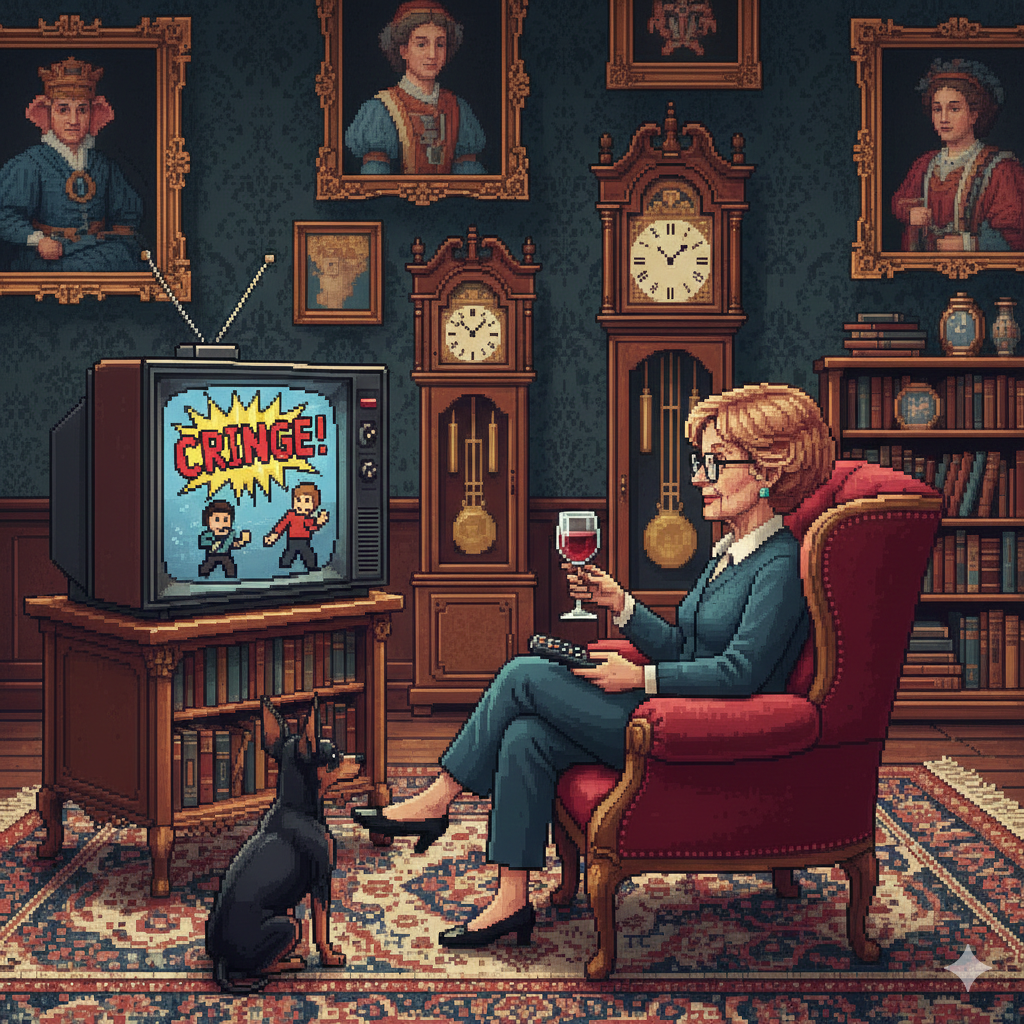
Maybe I’m uniquely situated as a girl from Alabama who has spent decades in New York, but I can’t help but notice that taste is frequently a code word for class. It’s not that people cannot afford finer things, it’s that they lack the refinement to desire it. We are sold this idea while wealthy people flaunt their Birkin bags that cost the amount to erase school lunch debt.
Maybe I just have poor taste. Funny how poor taste is poor but rich taste is refined.
I’ve seen a lot of people anticipating AI’s impact to their profession and grasping to the notion of taste as the one human thing the robot cannot take from us. I too want to grasp onto something we do uniquely well, but taste is not the foundation I’d place my expensive handbag on.
Even what we define as taste is highly subjective and has a very short lifecycle. I can tell you the Japandi minimalists snapping up properties upstate to transform into dream cabins were wearing trucker hats, Threadless tees, and throwing back PBRs in dive bars 20 years ago. Maturity no doubt plays a role, but funny how not a single one veered into the currently uncharted waters of a modern-day baroque.
Is the concept of taste itself a fog when cleared away reveals the word ‘STATUS’ just politely blurred like Norma Desmond’s close-up at the end of Sunset Boulevard? And if so, does taste just indicate status-seeking groupthink?
I’ve always found it fascinating that digital designers I’ve worked with from all over the United States all subscribe to a specific Swiss aesthetic, inherently foreign to themselves and the client they are serving. Designers pushed so hard to get custom fonts supported in browsers, only to make everything Helvetica Neue.
To be fair, a baroque aesthetic would be challenging in digital products. The performance hit of all that pattern, trying to make the grandiosity work on mobile. This is where computers have long been limiting our taste without us even realizing it.
This has real-world impact as outlined in this Guardian article on why coffee shops suddenly look the same everywhere. This isn’t the only way computers define our taste.
Who hasn’t worried about their Netflix recommendations when bingeing a trashy show? There’s no way to tell Netflix that I’m not really the kind of person who blindly loves, Love Is Blind. I watch it critically, anthropologically even. I’m Jane Goodall basically, studying, not merely watching, this phenomenon.
This may be why I was so intrigued when I came across this experiment in my LinkedIn feed. This tool allows you to state your taste by the things that you truly enjoy — books, movies, television. I could even give it my favorite poet, Frank O’Hara. In return, it gave me a podcast I’d never heard of that I really enjoyed the first episode of. Now I’m excited to see what it emails me next week.
Unlike click-based inference — which always felt like being quietly judged for something I can't explain — it let me define my taste on my own terms, outside of that omnipresent eye that makes me reconsider admitting how much I love the 1960s Batman series (too dorky, so juvenile, CRINGE).
And maybe this kind of taste making is where we will shine. But for taste to be a human superpower, it has to be truly human. Let’s make the machines figure out baroque, not conform simply to suit their preferences.